

Bid to continue Shetland's award-winning shellfish management
 The Shetland Shellfish Management Organisation (SSMO) is looking to renew local control of inshore shellfish fisheries for another 15 years.
The award-winning system has been in place since 1999 when the government devolved powers to regulate fishing for species like crab, lobster and scallops. Shetland is the only community in Scotland to have such controls.
Over the years the SSMO has won praise for raising standards in the governance of inshore fisheries, working in partnership with shellfish scientists at UHI Shetland. This has included national sustainability awards from the Marine Stewardship Council and trade newspaper Fishing News.
Only the 105 boats licensed by the SSMO are legally allowed to catch and land shellfish commercially from within six nautical miles of Shetland. This system prevents overfishing by unauthorised local and nomadic fishing boats which could cause the stocks to collapse.
The SSMO’s powers are set out in a Regulating Order which expires on 31st January 2028.
An application for a new order will have to undergo extensive scrutiny before it can be approved and laid before the Scottish Parliament to become law. The process includes rounds of consultation with fishermen, the wider community and various specialist stakeholders and government bodies.
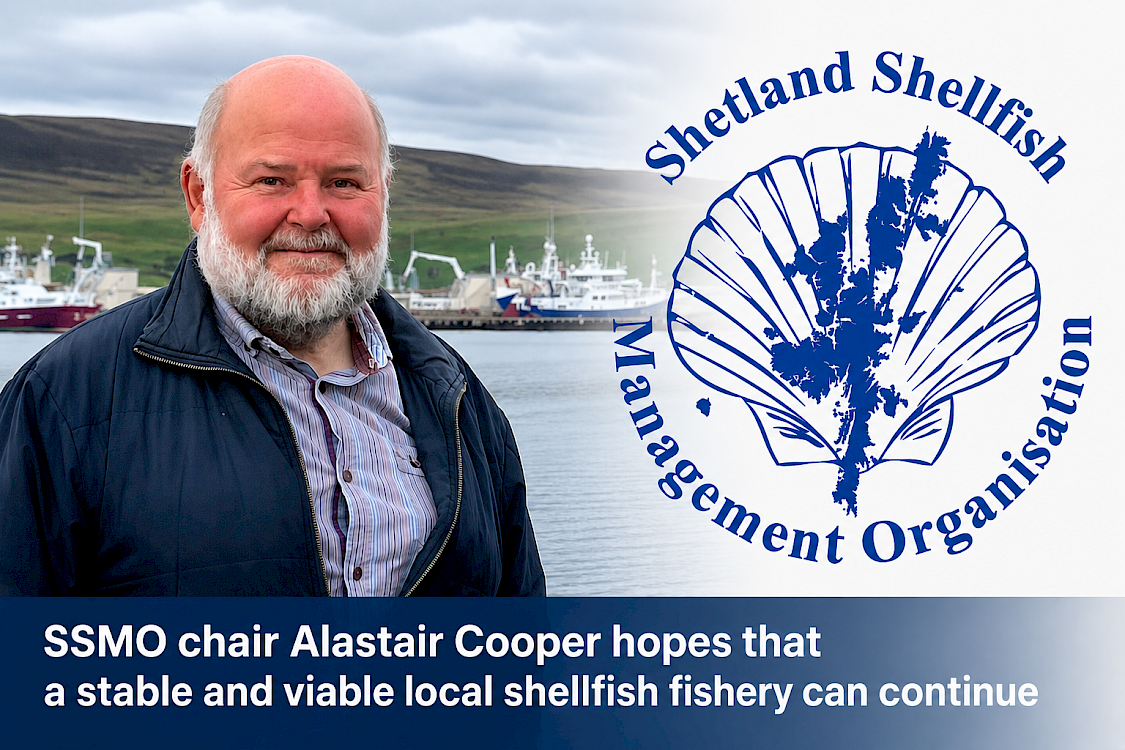
SSMO chair Alastair Cooper said: “We have a difficult journey before us and very limited resources to get us there. However, Shetland has a lot to lose if we don’t manage to secure a new Order.”
A series of five public meetings is being held this month to discuss the future management plans. These kick off in Yell on 10th September and continue on to Brae, Whalsay and Burra before finishing up in Lerwick.
SSMO inshore coordinator John Robertson said: “These will be fairly informal sessions aimed at those with an interest in the challenges of managing shellfish fishing. We’ll look a bit at what the SSMO does and what it plans to do if the Regulating Order continues.
“We will never please everyone but the main measure of success is keeping the stocks, and all the family fishing businesses, stable and sustainable.”
The SSMO has been boosted by strong support shown by licence holders who responded to a postal survey with 96 per cent in favour of the organisation continuing and applying for renewed powers.
The SSMO has faced public criticism down the years from fishermen unhappy about licensing restrictions and difficulties obtaining new licences.
Mr Cooper said: “It’s understandable that folk feel they should be entitled to a licence but the whole point of having a licensing system is to limit the numbers who can apply effort to limited shellfish stocks.
“We exist to prevent the stock collapses seen in the past with too many boats chasing a bonanza.”
Towards the end of the 19th century the Shetland oyster fishery collapsed due to overfishing. The same fate befell the lobster fishery in the 1960s. In the 1990s the scallop and crab stocks were being hammered by an enlarged local fleet and by boats from around the UK which could fish up to Shetland’s shores before the Regulating Order was put in place.
The powers set out in the Order come from the 1967 Shellfish Act and are limited to managing shellfish activities within six nautical miles.
Recently there has been suggestions that Shetland should pursue more extensive fisheries powers, such as over small boat mackerel jigging and possibly doubling the area of jurisdiction out to 12 nautical miles.
Mr Cooper said: “We, as a community, should debate what new powers we want to pursue. The SSMO has neither the remit nor the resources to push for powers beyond what it already has. But I would want the SSMO to very much be part of the debate if it comes.”
The SSMO board of directors is composed mainly of active shellfish fishermen and processors who give their time voluntarily. The organisation has one employee. The stock assessments and science advice from UHI Shetland depend on continuing financial support from Shetland Islands Council.
Among its other achievements, the SSMO pioneered the protection of sensitive seabed habitats from scallop dredging, closing 26 areas many years before any national proposals emerged for inshore protections.
The public consultation meetings in September, all starting at 7pm:
Thursday 10th – Mid Yell Hall club room
Monday 14th – Brae Community Hall club room
Wednesday 16th – Symbister Hall
Monday 21st – Burra Public Hall upstairs
Wednesday 23rd – Rm 12, Islesburgh Community Centre, Lerwick